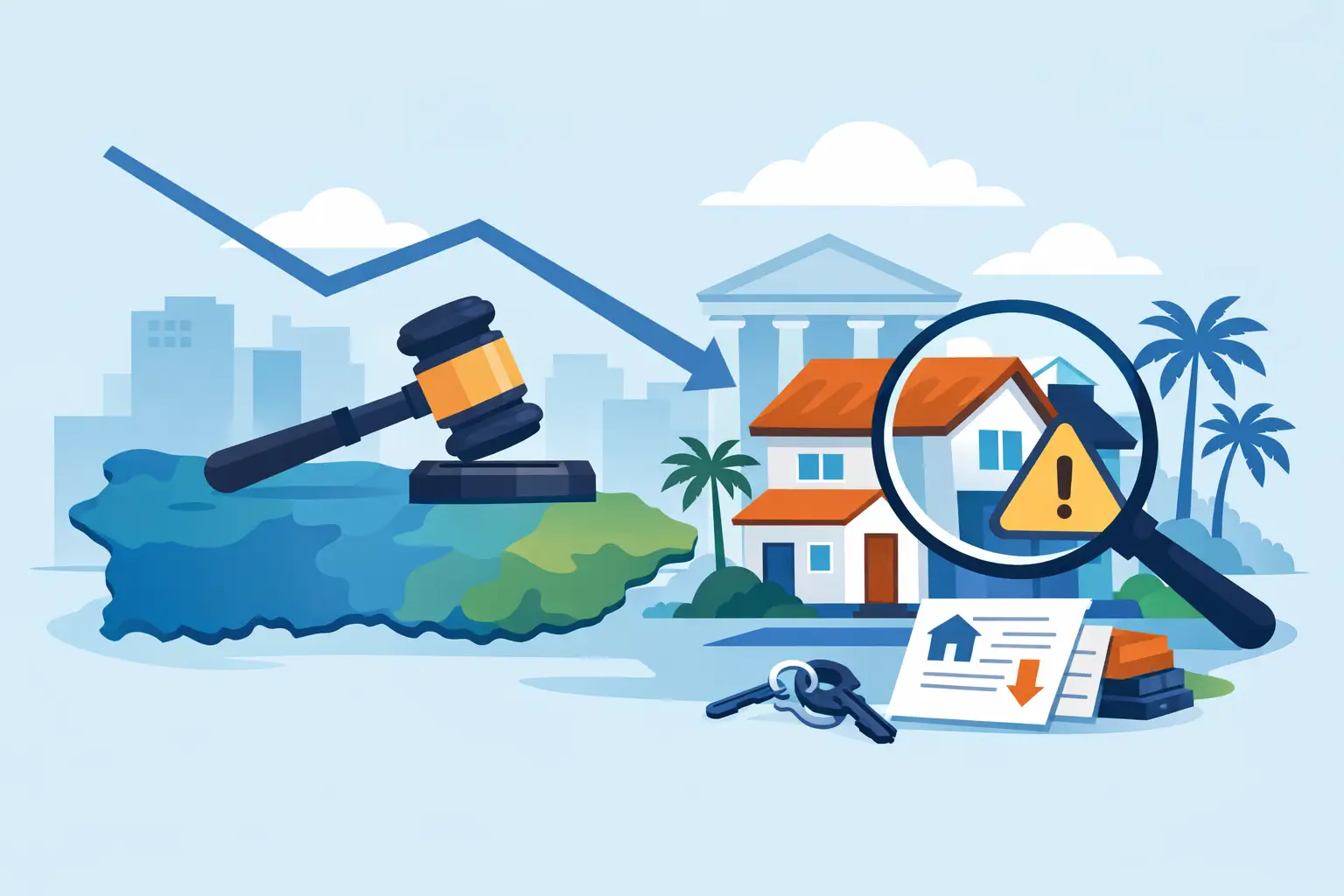
A foreclosure filing can change the path of a property long before it ever shows up as an REO listing. If you are trying to understand the puerto rico foreclosure process as a homeowner, buyer, or investor, the key is knowing where the legal case starts, how the timeline usually unfolds, and when an opportunity actually becomes available for purchase.
For many buyers, foreclosure-related inventory sounds simple: a borrower stops paying, the bank takes the home, and the property goes up for sale at a discount. In practice, it is more procedural than that. There are court steps, service requirements, judgment issues, auction procedures, and post-sale realities that affect both timing and risk. That is why serious buyers and investors benefit from understanding the process before they start chasing distressed inventory.
How the Puerto Rico foreclosure process usually starts
In most cases, foreclosure begins after a borrower falls behind on mortgage payments and the lender decides to enforce the loan documents. The missed payments alone do not transfer ownership. The lender still has to pursue the legal remedy available under the mortgage and promissory note.
Puerto Rico foreclosure actions are generally handled through a judicial process. That means the lender typically files a case in court rather than completing the foreclosure entirely outside the court system. Once that case is filed, the borrower must be served and given the opportunity to respond. If the borrower contests the action, the case can move more slowly. If there is no effective response, the lender may be able to move toward judgment more efficiently.
This is one of the first places where expectations often get out of sync with reality. A property may be in distress for months before it is available for sale. It may also sit in litigation longer than a buyer expects, especially if service is delayed, documents are challenged, or the borrower seeks loss mitigation or other relief.
What happens during the foreclosure case
After filing, the lender must prove its right to foreclose. That usually involves showing the existence of the loan, the mortgage lien, the borrower default, and the amount due. If the court is satisfied, it can enter judgment in favor of the lender.
For homeowners, this stage matters because it is often the window in which repayment discussions, loan modifications, negotiated resolutions, or other defenses may still affect the outcome. Not every case ends the same way. Some borrowers cure the default. Some negotiate more time. Some properties proceed all the way to judicial sale.
For buyers and investors, the lesson is simple: a foreclosure filing is not the same as a listing. Until the legal process advances far enough, there may be no property to buy and no reliable date for when it will be marketed.
Judicial sale and auction stage
Once the lender obtains the required court authorization, the property may be scheduled for sale according to the procedures set by the court and applicable law. This is the part many people picture when they think of foreclosure, but it comes later than most assume.
At the auction stage, the property may be offered for sale to satisfy all or part of the debt. If a third party bids successfully and completes the purchase, ownership can transfer through that sale process. If no outside buyer purchases the property, the lender may end up taking title and moving the property into real estate owned, or REO, status.
That distinction matters. Auction properties and REO properties are not the same thing. Auction purchases often involve stricter timelines, limited inspection access, and more uncertainty about occupancy or condition. REO properties are lender-owned after foreclosure and are often marketed more conventionally through brokers and listing channels.
Why timelines vary so much
Anyone looking for a fixed answer on timing will be disappointed. The puerto rico foreclosure process can move faster or slower depending on the facts of the case, the court, the borrower response, document issues, service of process, bankruptcy filings, and settlement efforts.
A straightforward uncontested case may progress much more predictably than a contested one. A vacant property may move differently than an owner-occupied home. A lender with complete documentation may act more quickly than one still resolving file issues. Even after judgment, scheduling and completing a sale can take time.
This is why buyers should be cautious about planning around a rumored foreclosure date. Distressed inventory often appears to be just around the corner, then remains tied up for months. Patience is part of the strategy.
Borrower rights and practical realities
Homeowners facing foreclosure should not assume the process is immediate or automatic. Judicial foreclosure requires procedure, notice, and court involvement. That does not mean the outcome will always favor the borrower, but it does mean there may be time to evaluate options.
Depending on the situation, those options may include reinstatement, payoff, refinancing, negotiated sale, loan workout discussions, or legal review of the lender’s claims and documents. The practical value of any option depends on timing, equity, income, and the lender’s willingness to negotiate.
For family members or heirs dealing with inherited property, the situation can be even more complicated. Title issues, succession matters, and unpaid charges can create delays or reduce the available solutions. In those cases, waiting too long usually makes the problem harder, not easier.
What buyers should know before pursuing foreclosure properties
The biggest mistake buyers make is assuming every foreclosure-related property is a bargain. Some are priced attractively. Some are not. The discount, if there is one, has to be weighed against condition, title issues, repair needs, occupancy status, and carrying costs.
If you are considering a foreclosure or bank-owned purchase, the purchase path depends on where the property is in the cycle. A pre-foreclosure situation may involve a negotiated sale before the lender takes title, but those deals can be sensitive and uncertain. Auction purchases can move quickly and may require cash or immediate proof of funds. REO properties are often easier for financed buyers because the seller is already the bank or institution, and the transaction tends to follow a more familiar contract process.
That is one reason many buyers prefer lender-owned inventory over courthouse-style opportunities. With REO properties, there is usually clearer access to pricing, property details, showing arrangements, and offer procedures. There may still be repair issues or seller addenda, but the path is generally more manageable.
REO versus foreclosure auction
An auction can look attractive because the headline price appears low. But lower entry price does not always mean lower total cost. You may have less time for due diligence, limited ability to inspect, and less room to negotiate after the fact.
An REO listing usually offers more transparency. You can often review disclosures, inspect the property subject to access, evaluate financing options, and compare it to other inventory. That added clarity is one reason many owner-occupants and cautious investors focus on bank-owned homes rather than earlier-stage foreclosure events.
How to approach the process as a serious buyer
Start by deciding what kind of deal you actually want. If you want the deepest possible discount and can tolerate uncertainty, auction or heavily distressed opportunities may fit. If you want a more predictable transaction, REO and government-backed inventory are often the better lane.
Next, get clear on financing. Many distressed homes need repairs, and some will not qualify for conventional financing without work. Cash buyers have flexibility, but financed buyers can still compete if they understand property condition, lender requirements, and closing timelines.
Then focus on reliable inventory sources and professional guidance. In Puerto Rico, distressed inventory can include bank-owned properties, HUD homes, and agency-related listings from institutions such as Fannie Mae or Freddie Mac. Each seller type may have its own contract package, offer process, and response timeline. A buyer who understands those differences is in a much better position than someone treating all foreclosure properties the same.
At ArroyoLaRue Realty, that specialized inventory is where practical guidance matters most. A buyer does not just need access to listings. A buyer needs to know whether the opportunity is truly available, what stage it is in, what paperwork to expect, and where the hidden costs may be.
The value of understanding the Puerto Rico foreclosure process
Knowing the puerto rico foreclosure process helps you separate real opportunity from noise. It tells homeowners when urgency is real. It tells buyers why a property may not be available yet. And it helps investors avoid building a strategy around assumptions that do not match the legal timeline.
Some foreclosure-related deals close smoothly. Others involve delays, title questions, repair surprises, or seller procedures that test your patience. That does not mean distressed property is not worth pursuing. It means the best results usually go to buyers who understand the process, stay flexible, and evaluate each property on its actual facts.
A good deal is rarely just about price. It is about timing, condition, terms, and knowing what you are stepping into before you make your move.